Mounting
Mounting Location
The mounting position and alignment of the unit is important for achieving optimal performance of the unit. Position refers to the physical location within the vehicle where the unit is installed while alignment refers to the orientation of the unit with respect to the orientation of the vehicle.
You should apply the following recommendations when selecting a mounting location:
- Mount the unit in an area that will not exceed the rated temperature range, and with minimal temperature fluctuations.
- Mount the unit away from high levels of vibration where possible.
- Mount the unit within several metres of the GNSS antennas where possible.
- Mount close to the centre of gravity of the vehicle where possible.
- Mount the unit at least 10 cm away (and preferably as far as possible) from sources of dynamic magnetic interference such as high current wiring or large motors for best performance.
- Do not obstruct the air vents to the unit, unless atmospheric altitude is not required and the Atmospheric Altitude is disabled. Air flow is required to ensure accurate sensing from the atmospheric pressure sensor.
Mounting steps
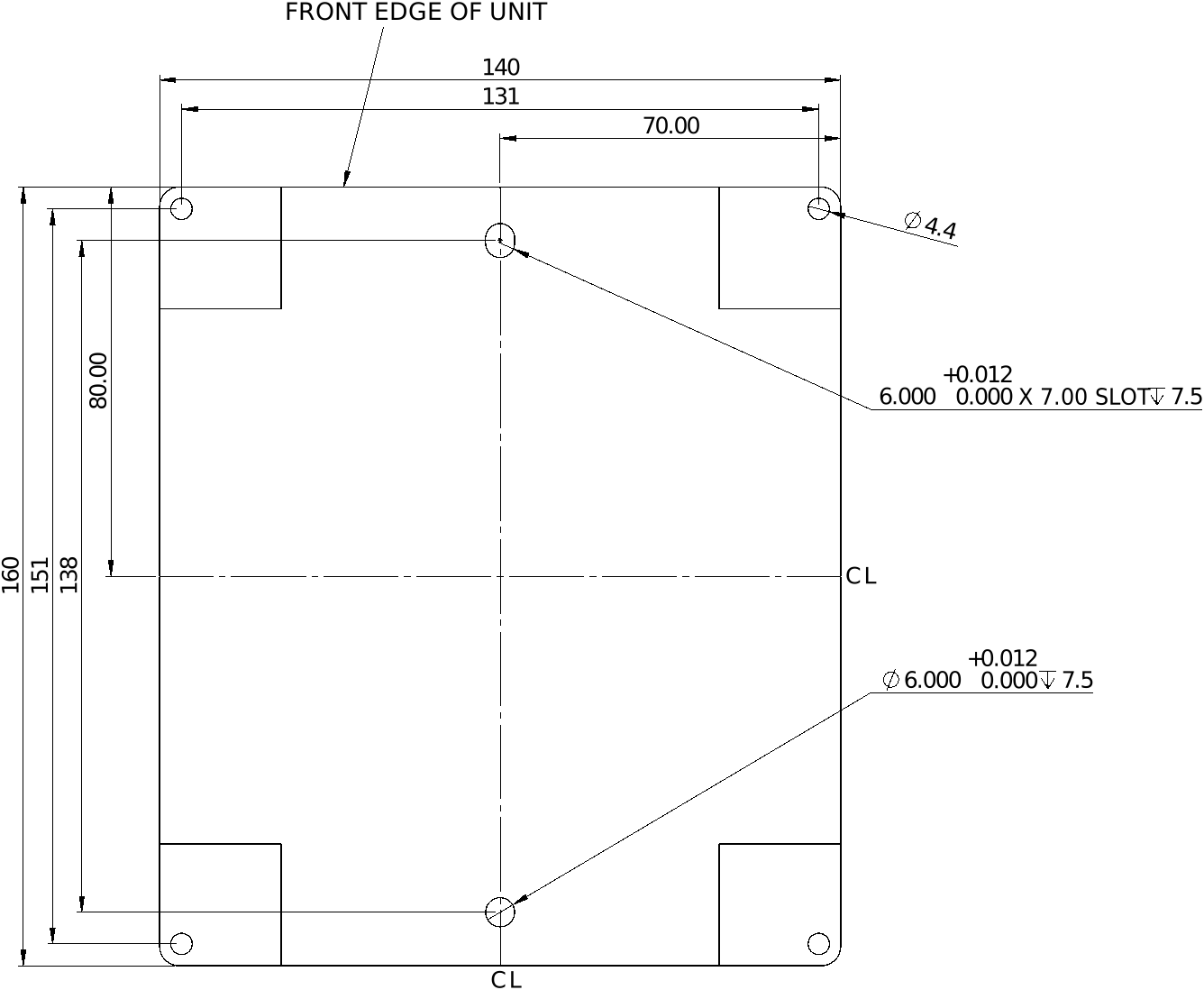
The unit is mounted using four M4 diameter screws through the holes on the base of the enclosure.
For precision mounting, an alignment hole 6 mm and an alignment slot 6 mm x 7 mm are provided at the middle edge of the enclosure. They are designed for 6 mm dowel pins.
Suitable alignment dowel pins are based on DIN 6325.
You should use M4 stainless steel washers with an outside diameter of 9 mm under the bolts. Blue loctite can also be used to prevent the screws from loosening over time.
Apply the following steps when mounting:
- Place the unit in position on the alignment pins and apply gentle pressure in the positive y-axis direction.
- Install the M4 mounting screws.
- Tighten the stainless steel bolts in a clockwise direction to a torque of 1 Nm.
Mounting diagrams
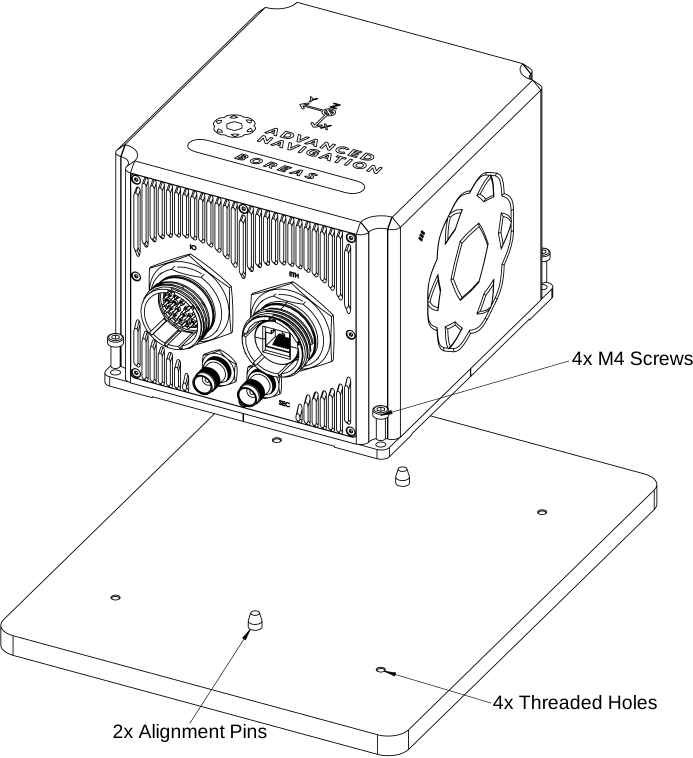
Boreas Mounting Holes and Alignment Pins